
- Home
- Sales and revenue
- Running costs
- Financial
Interior design businesses require effective financial planning and management to ensure long-term success. Building a financial model can help you identify key performance drivers, set financial goals, and measure your progress over time. In this blog post, we’ll explore the main components of an interior design financial model and provide tips and strategies for creating a solid financial foundation for your business. Whether you’re just starting out in the industry or looking to grow your existing interior design business, this guide will help you create a comprehensive financial plan that sets you up for success.
Interior Design Revenue and Sales Forecast
Revenue and sales forecasts are a crucial part of any interior design financial model. It provides an estimate of the total revenue the business can generate over a given period. Launch date, sales ramp-up time, walk-in traffic, and growth assumptions are some of the factors that impact forecasts. Customer and purchasing assumptions, as well as the seasonality of sales, also play an important role.
It is important to have a complete and accurate revenue and sales forecast as it serves as a guide for the overall financial planning and management of the interior design business. With the help of interior design financial projections, business owners can make informed decisions on investments, expenses, and marketing strategies that can impact overall profitability.
Generating a competent interior design financial statement requires sound financial planning and management strategies. By developing and implementing an effective financial management plan, interior designers can ensure that their earnings skyrocket and they can achieve their long-term business goals.
Interior design launch date
If you are planning to start an interior design business, you should pay a lot of attention to the launch date. The launch date can affect your business in many ways, such as resource availability, competition, and market trends. Therefore, choosing the right launch date for your business is crucial.
Why is the launch date important?
- The launch date can determine the success or failure of your business.
- The launch date can help you plan and plan your activities and costs.
- The launch date may affect the availability of resources such as funding and personnel.
- The launch date can give you an edge over the competition.
Choosing the right launch date can be difficult, and there are many factors to consider. You need to analyze market trends, your competitors and the availability of resources. You should also consider the seasonality of your business, as some months may be busier than others.
Tips & Tricks:
- Research your competitors and choose a date that will give you an advantage.
- Consider the availability of funding and staff.
- Consider the seasonality of your business.
In conclusion, the launch date of your interior design business is very important. You should spend time analyzing market trends, competition, and resource availability to choose the right launch date. By doing so, you can increase your chances of success and effectively plan your activities and costs.
Rise time in interior design
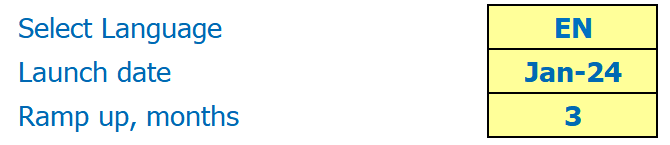
When starting an interior design business, it is important to forecast your sales projections. A crucial element to consider when doing this is the ramp-up time. The ramp-up time is the period it takes your business to reach the sales plateau. In other words, it is the time it takes to reach a point where sales stabilize and no longer increase at a rapid rate.
Source: Interior Design Financial Model
Why is ramp-up time important to predict? For starters, it helps you determine how much capital you will need to invest before your business starts generating steady income. If your ramp-up time is longer, you will need to have a larger financial cushion to sustain your business until you reach the sales plateau. Plus, it helps you set realistic expectations and adjust your marketing and growth strategies accordingly.
What is the ramp-up period for your interior design business? It can vary depending on a number of factors, such as your niche, your marketing strategy, and your competition. In the interior design industry, it usually takes around 6-12 months for companies to reach sales plateau.
Tips & Tricks:
- Do your research and dial in your ramp up time against other interior design companies in your market.
- Invest in quality marketing and networking efforts to help speed up time to scale.
- Have a solid financial plan in place to support your business during the ramp-up period.
- Regularly review your sales projections and adjust your strategies as needed.
Forecasting your interior design startup financial plan can seem overwhelming, but taking the time to understand and consider ramp-up time can set your business up for long-term success.
Interior design walk-in traffic entrances
Assuming a six-month ramp-up period, the average daily traffic-in for a new interior design store should be around 50 visitors per day during the week. However, this number may increase on weekends and holidays due to increased leisure time and shopping activities. Therefore, it is important to track these fluctuations over time and adjust the financial model accordingly.

Source: Interior Design Financial Model
After the ramp-up period, the average walk-in traffic will stabilize and plateau. This assumption is crucial in building a financial model for interior design businesses, as it determines the number of potential customers and sales revenue. For example, if the sales plateau shows an average of 50 visitors per weekday, the store can expect to generate ,000 in sales with a conversion rate of 25% and an average transaction value of 0.
In addition, the financial model should take into account the expected growth rate of walk-in traffic for future years. Assuming a conservative growth rate of 5% per year, the store can expect to average 52 visitors per weekday in year one, 55 in year two, and so on. These projections can help the store plan marketing campaigns, staffing and inventory management.

Source: Interior Design Financial Model
Tips & Tricks:
- Monitor walk-in traffic during different seasons and holidays to adjust your financial model accordingly
- Promote your business through social media, events and collaborations to increase brand awareness and attract potential customers
- Offer personalized consultations, design packages and loyalty programs to retain customers and increase sales revenue
Interior design visits for sales conversion and sales inputs
When it comes to running an interior design business, it’s important to understand the conversion rate of visitors to new customers. On average, the conversion rate from visits to sales in the interior design industry is around 25%. This means that for every four potential customers who visit your store or website, one will make a purchase.

Source: Interior Design Financial Model
Another important factor to consider is the percentage of repeat customers. In the interior design industry, the average percentage of repeat customers is around 40%. This means that out of ten customers, four will return and make additional purchases. It’s important to consider this when creating a financial model for your interior design business, as repeat customers can provide a steady stream of income.
- Increase the likelihood of repeat customers by offering discounts or promotions for returning customers.
- Provide exceptional customer service to make customers feel valued and more likely to return.
Tips & Tricks:
Knowing the percentage of repeat customers is only part of the equation. In order to accurately predict revenue, you also need to consider the amount of each repeat customer per month. On average, repeat customers in the interior design industry will make about two purchases per month, each with an average value of 0. This means that each repeat customer generates around ,000 in monthly revenue.
Considering these conversion rates and repeat sales inputs is critical when developing your interior design financial projections because it helps you create an accurate financial model. By understanding your client base and projected revenue streams, you can create a robust financial plan for your interior design startup or established business.
INTERNET sales entrance design
Your interior design store sells different interior design products, each belonging to a specific product category. To better understand your sales mix, it is important to enter sales mix assumptions based on product category leverage. This allows for easier understanding and analysis of different product categories.

Source: Interior Design Financial Model
Let’s take a look at the sales mix by product category assumptions. For example, you might have five product categories: furniture, lighting, rugs, accessories, and artwork. You can enter the percentage sales mix for each of the five years of your forecast for each product category.
Here is an example:
- Furniture – 50%
- Lighting – 20%
- Carpet – 10%
- Accessories – 15%
- Artwork – 5%
Tips & Tricks:
- Be sure to update your sales mix assumptions regularly to reflect changes in your store.
- Use sales mix assumptions to help forecast sales and set goals for different departments.
- Keep track of actual sales percentages and compare them to your assumptions to see where you may need to make adjustments.
Interior Design Average Input Selling Average

Source: Interior Design Financial Model
Our interior design business offers a wide range of products including furniture, lighting, decor and fabrics. To simplify our financial projections, we have categorized these products into specific categories, such as sofas, chairs, lamps, rugs and curtains. Rather than estimate the average sale amount for each individual product, we entered assumptions at the product category level.
For example, we estimate that the average sales amount for sofas will be ,000 in the first year of operation, ,200 in the second year, and ,400 in the third year. Meanwhile, the chairs’ average sale amount is estimated at 0, 0, and 0, respectively. These estimates are based on market research, competitor analysis and our own industry experience.
Using these assumptions, we can easily calculate the average ticket size for each customer. Let’s say our store’s sales mix is 30% sofas, 20% chairs, 10% lamps, 25% rugs, and 15% curtains. If we multiply the average sale amount for each product category by its respective sales mix and add all the results, we get the average ticket size. This allows us to more accurately forecast our income and expenses.
Tips & Tricks:
- Regularly update your assumptions based on actual sales data and market conditions.
- Consider the seasonality of your products and how it affects sales and prices.
- Remember to factor in cost of goods sold and other variable expenses when estimating your finances.
Seasonality of interior design sales
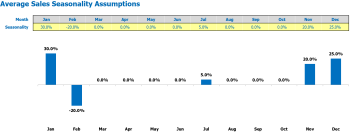
A crucial aspect of running an interior design business is understanding sales seasonality. It’s important to have a clear understanding of your sales trends throughout the calendar year to stay on top of your finances and make informed decisions.
Source: Interior Design Financial Model
For example, the winter holidays typically see an increase in decorating and staging transactions. A great step to take, to prepare for this rush, is to ensure that all aspects of the design business have enough inventory and resources to effectively handle this holiday rush. November and December sales increase by a significant percentage, typically peaking in late December, according to interior design’s financial projections.
Tips & Tricks:
- Be sure to take note of how the holidays can affect the demand for interior design services.
- Identify the months, the months have historically been slow and are planning events, marketing and promotions to help combat this seasonal slowdown.
- Take the time to analyze and update projections to truly assess what a business can do.
Other examples of seasonality could be cyclical patterns associated with nature. For example, during the spring there may be a greater demand for gardening and landscaping services. Interior design financial analysis should consider these types of cyclical patterns and how they relate to the needs and demands of potential customers, as well as what the business tends to expect.
To map the seasonality of a company’s interior design financial planning, it is important to consider the percentage deviation from average monthly sales per day. This will help prepare for any temporary periods when sales drop, which is necessary for the proper management of interior design financial management. Overall, a good understanding of sales seasonality can be a valuable tool that can greatly help any interior design business owner make informed decisions about how to allocate resources and plan financially.
Interior Design Operational Forecast
In the interior design financial model, operational expenses provide an essential component. The objective is to forecast business expenses for interior design, such as cost of goods sold by products %, employee salaries and wages, rent, lease or mortgage payment, utilities and others operating costs. Accurate financial forecasts ensure that a business is financially prepared and can make informed decisions about future spending.
| Expenses | Amount (per month) Ranges in USD |
|---|---|
| Cost of Goods Sold by Products% | ,000 – ,000 |
| Salaries and wages of employees | ,000 – ,000 |
| Rent, lease or mortgage payment | ,000 – ,000 |
| Public services | 0 – ,000 |
| Other running costs | ,000 – ,000 |
| Total | ,500 – ,000 |
Interior design cost of goods sold
The interior design business plan is incomplete without mentioning cost of goods sold (COGS) assumptions. COGS is the direct cost of producing goods or services. When determining the price of the product, these costs must be taken into account. In the interior design industry, COGs typically include products such as furniture, accessories, and finishes.

Source: Interior Design Financial Model
The COG percentage will vary depending on the product category. For example:
- Furniture: 50% of income
- Decorative accessories: 25% of income
- Lighting: 20% of revenue
- Structures: 10% of income
Tips & Tricks:
- Regularly review and update your COGS assumptions to ensure accuracy.
- Consider outsourcing some production to reduce labor costs.
Keeping track of COGs is essential to ensure profitability and effective financial management in interior design activities. Proper planning, forecasting, and financial management can help create a successful interior design business.
Salaries and wages of employees of employees
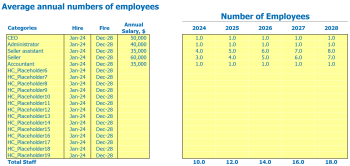
When starting an interior design business, it is important to plan your finances carefully. A crucial aspect of this is your salary and employee salary. You will need to decide on staff members/positions, when they will be hired, how much they should earn, and how many full-time equivalent (FTE) staff you will need each year.
Source: Interior Design Financial Model
For example:
- Interior Designer – 3 month hire – ,000 per year – 1 FTE
- Project Manager – Hired at 6 month – ,000 per year – 1 FTE
- Junior Designer – hired at 9 month – ,000 per year – 1 FTE
- Administrative Assistant – Hired at 6 month – ,000 per year – 1 FTE
Tips & Tricks:
- The search industry has averages to make sure you offer competitive salaries.
- Consider benefits such as health insurance, vacation pay, and pension plans.
- Stay organized with human resources software to manage employee information and payroll.
By making informed decisions about salaries and wages for your interior design employees, you can set your business up for success and ensure happy, motivated staff members.
Interior design rental, lease or mortgage payment
In order to run an interior design business, you will need to pay rent, lease, or mortgage payments for your workspace. The amount of money that will go towards this cost depends on a few assumptions.
Rent: Assuming you are renting a studio or office space, the cost of your rent will depend on the location and size of your workspace. For example, renting a studio in Brooklyn, NY can cost you around 00 to 00 per month.
Lease: If you opt for a lease, the amount of your lease payments may depend on the terms and conditions of the lease agreement. In general, renting a space for a year or more will cost less than renting on a monthly basis.
Mortgage payment: If you decide to buy a property, there will be a mortgage payment. Your mortgage payment amount is based on a variety of factors, including purchase price, down payment and interest rate. For example, a 0,000 commercial property with a 4% interest rate may cost you around ,387 per month on a 30-year fixed mortgage.
Tips & Tricks
- Compare prices and locations when researching rental or rental options.
- Be sure to read and understand rental agreements before signing.
- If you’re going for a mortgage, talk to several lenders and compare offers to get the best deal.
Interior design utilities
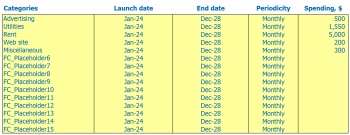
One of the most crucial aspects of Interior Design Financial Planning is determining utility projections. This refers to the ongoing expenses necessary for the day-to-day operations of the business. Some common examples of utilities include rent, electricity, water, and internet.
Source: Interior Design Financial Model
When creating the Interior Design Business Plan , it is important to consider the cost of utilities over time. This can be done through interior design financial modeling , which uses historical data to make predictions about future spending.
Tips & Tricks:
- Research and compare different utility providers to find the best deals
- Make a budget and stick to it to avoid overspending on utilities
- Consider renewable energy options to save money in the long run
By creating accurate Interior Design Financial Projections for Utilities, business owners can effectively manage their expenses and ensure the long-term success of their business.
Interior design Other running costs
Source: Interior Design Financial Model
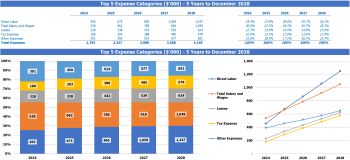
Besides direct expenses such as employee salaries or material costs, there are other running costs that should be considered Financial model for an interior design business . This includes costs such as:
- Rent and utilities for office space
- Printing, supplies and postage
- Marketing and advertising expenses
- Assurance
- Legal and accounting fees
These costs may seem small, but they can quickly add up and impact financial forecasts . For example, understating the office rent could lead to a cash flow problem later. It is important to factor these expenses into the interior design startup financial plan to ensure accurate financial projections .
Interior Design Financial Forecast
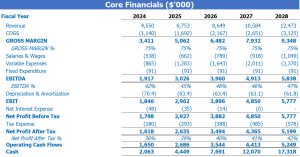
In the world of interior design, knowledge of financial forecasting is essential for a successful business. The financial model includes various aspects such as financial statements, projections and analysis of the interior design business. One of the most crucial sections of the financial model is the profit and loss statement, which provides information about the revenue, costs, and expenses of the business. Additionally, the sources and use of the report finds where the company will receive funding and how it will allocate that money.
Profitability of interior design
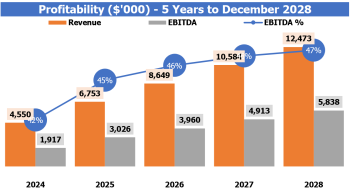
Once we have created income and expense projections for our interior design business plan, we can move on to checking the profit and loss (P&L) and understanding the profitability of our business. The P&L statement will show us the income we generated and the corresponding expenses we incurred. This will allow us to visualize our “profitability” such as gross profit or EBITDA margin.
Source: Interior Design Financial Model
Profitability is one of the most critical elements of financial analysis for an interior design startup financial plan. This will help us better understand how much money we are earning compared to what we are spending. We may also check our sales figures and profit margins to identify what is working for us and what is not.
Tips & Tricks:
- Focus on increasing revenue while keeping expenses under control to increase profitability.
- Set realistic goals, measure and dial your business performance to track progress.
- Understand your customer profit margins and target the most profitable customers.
With the help of the interior design financial projections and P&L statement, we can analyze the financial health of our business and plan accordingly. We can also identify areas where we need to improve and make necessary changes to our financial management of interior design. By setting realistic goals, understanding our clients’ needs, and keeping a close eye on our finances, we can create a solid financial strategy for our interior design business.
Source: Interior Design Financial Model
Interior design sources and uses the chart
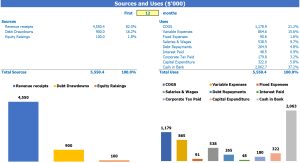
Sources and uses of funds within the financial model in Excel for Interior Design provides users with an organized summary of where capital will come from sources and how that capital will be spent in uses.
Source: Interior Design Financial Model
It is important for the total amounts of sources and uses to be equal to each other. Disclosure of sources and uses is particularly critical when the company is considering or going through recapitalization, restructuring, or mergers and acquisitions (M&A).
Tips & Tricks:
- Regularly update your financial projections to ensure accuracy
- Use historical data to inform financial forecasting and planning
- Seek advice from financial experts to improve financial management
Building a financial model for your interior design business is an essential aspect of business planning. It helps you develop a clear understanding of your financial planning, projection and management goals. With the right financial modeling tools and techniques, you can make informed decisions, take advantage of opportunities, and address potential financial challenges. Collecting vital data, using financial software, and identifying key performance indicators (KPIs) are some of the tools needed to create a solid financial model for your interior design business. With a solid financial model in place, you can take control of your finances, set achievable goals, and chart a clear path to financial success.