Marine Insurance: Coverage for Boats, Yachts, and Cargo
Atomic Answer: Marine insurance-guide-to--1780905815241 is a specialized coverage that protects boats, yachts, and cargo against financial loss from physical
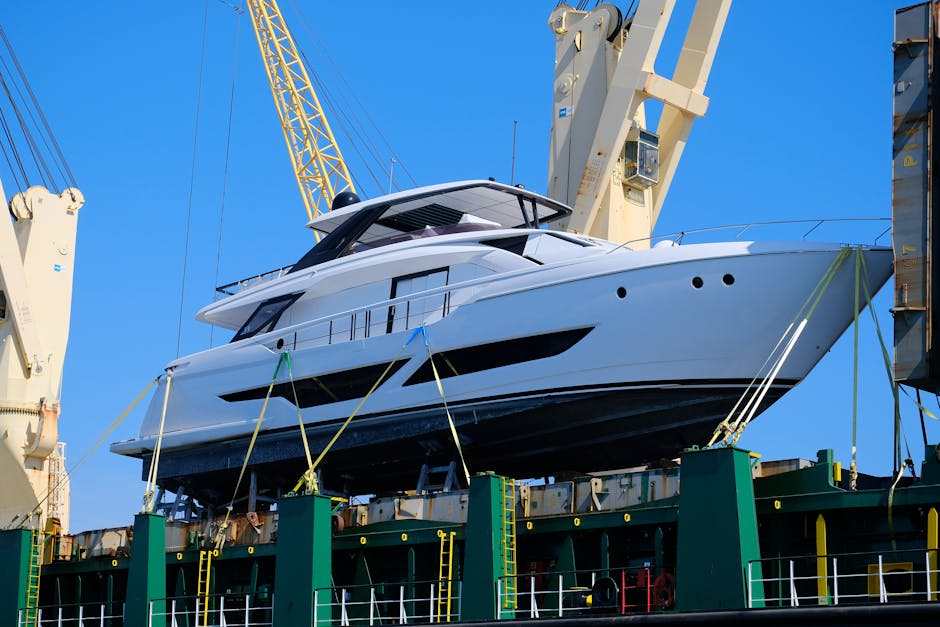
1. What Is Marine Insurance and How Does It Differ from Standard Insurance?
Marine insurance is a contract where an insurer agrees to indemnify the insured for specific losses related to maritime activities—covering vessels, cargo, freight, and liability. It originated in 17th-century London’s Lloyd’s Coffee House and remains governed by the Marine Insurance Act of 1906 in many jurisdictions. In the U.S., marine insurance is regulated at the state level but often follows federal admiralty law.
The critical difference from standard property insurance lies in the perils covered. Standard homeowners or auto policies exclude "perils of the sea"—events like grounding, capsizing, and piracy. Marine policies are also valued policies, meaning the payout is predetermined (e.g., agreed value of $50,000 for a boat), unlike property insurance that uses actual cash value (depreciated value). For example, a boat insured for $100,000 under a marine policy would pay $100,000 if totaled, even if its market value is $80,000.
Another distinction: marine insurance often includes sue and labor clauses, requiring the insured to take reasonable steps to minimize loss. If your boat is sinking, you must try to pump water out; failure to do so could void coverage. Standard insurance lacks this proactive duty.
Actionable Steps:
- Review your current homeowners policy: Most exclude boats over 50 HP or valued over $1,000.
- Request a marine insurance quote from a specialist provider like BoatUS or Progressive Marine.
- Check if your state requires liability insurance for boat registration (e.g., New York requires $50,000 liability for boats over 14 feet).
2. What Does Marine Insurance Cover for Boats and Yachts?
Boat and yacht insurance typically bundles physical damage coverage and liability coverage. Here’s a breakdown:
Physical Damage (Hull & Machinery):
- All-Risk Coverage: Covers accidental damage unless specifically excluded. Examples: collision with a dock, striking a submerged log, fire, theft of outboard motor, vandalism.
- Named Perils: Covers only listed perils like fire, lightning, explosion, theft, and sinking. Older policies may use this.
- Agreed Value vs. Actual Cash Value: Agreed value pays the insured amount; actual cash value subtracts depreciation. For a 10-year-old boat worth $30,000 new, ACV might pay $18,000, while agreed value pays the full $30,000.
Liability Coverage:
- Bodily Injury: Covers medical costs and legal fees if you injure someone (e.g., a waterskier hit by your boat). Minimum recommended: $300,000; most policies offer $500,000–$1,000,000.
- Property Damage: Covers damage to other boats, docks, or structures. Example: hitting a $50,000 dock—covered up to your limit.
- Pollution Liability: Covers cleanup costs if your boat spills fuel or oil. The Oil Pollution Act of 1990 requires boat owners to have $1,000–$10,000 in cleanup coverage.
Additional Coverages:
- Medical Payments: Covers medical expenses for you and passengers regardless of fault. Typical limits: $1,000–$10,000.
- Uninsured Boater Coverage: Covers you if hit by an uninsured boater. Only 15% of boaters carry insurance, according to the National Association of Insurance Commissioners (NAIC).
- Personal Effects: Covers fishing gear, electronics, and personal items. Limit: $1,000–$5,000.
- Towing and Assistance: Emergency towing, fuel delivery, and jump starts. Provided by Sea Tow or TowBoatUS.
Table 1: Coverage Comparison—Boat vs. Yacht Insurance
| Feature | Boat Insurance (Under $100,000) | Yacht Insurance (Over $100,000) |
|---|---|---|
| Agreed Value | Often not available | Standard |
| Navigation Area | Inland waters, coastal 50 miles | Extended to Bahamas, Caribbean |
| Lay-up Period | Optional (winter storage) | Required (6 months) |
| Crew Coverage | Not included | Included for hired crew |
| Salvage & Wreck Removal | Limited ($5,000) | Full coverage ($50,000+) |
| Average Premium | $300–$800/year | $1,500–$4,000/year |
| Deductible | $250–$1,000 | $1,000–$5,000 |
Case Study: John, a 45-year-old fisherman, owned a 25-foot Boston Whaler valued at $60,000. He had a standard boat policy with $300,000 liability and $1,000 deductible. While docking at a crowded marina in Miami, his engine failed, causing him to crash into three other boats, damaging a $120,000 yacht and injuring two passengers. His liability coverage paid $300,000 toward the $450,000 total claim. He had to pay the remaining $150,000 out of pocket. Lesson: Increase liability limits to at least $500,000 for coastal boating.
Actionable Steps:
- Calculate your boat’s replacement cost (use NADA Guides or Boat Trader).
- Request a quote for agreed value coverage—it costs 10–15% more but avoids depreciation surprises.
- Add uninsured boater coverage if you boat in high-traffic areas like Lake Tahoe or the Florida Keys.
3. What Is Cargo Insurance and Why Do Shippers Need It?
Cargo insurance protects goods in transit via ocean, air, or land, covering loss or damage from perils like rough seas, theft, fire, and collision. It’s essential for international trade: the World Bank estimates 90% of global trade is carried by sea, with $1.5 trillion in cargo value at risk annually.
Types of Cargo Insurance:
- Open Cover Policy: Provides automatic coverage for all shipments during a policy period (usually 12 months). Preferred by regular shippers. Example: A coffee importer ships 50 containers yearly—open cover covers each automatically.
- Voyage Policy: Covers a single shipment from origin to destination. Used by infrequent shippers.
- All-Risk vs. Named Perils: All-risk covers all accidental loss except exclusions; named perils lists specific events. All-risk costs 0.2–0.5% of cargo value; named perils costs 0.1–0.3%.
What’s Covered:
- Physical loss or damage (e.g., container crushed by crane)
- Theft and pilferage (common in ports like Lagos, Nigeria—theft rates exceed 15% per year)
- General average contribution (if ship jettisons cargo to save vessel, all cargo owners share loss)
- War and strikes (available as add-on)
What’s Not Covered:
- Inherent vice (e.g., fruit rotting, electronics failing)
- Insufficient packaging (carrier may deny claim)
- Delay (unless specifically covered)
- Nuclear risks
Table 2: Cargo Insurance Premiums by Cargo Type (2025 Estimates)
| Cargo Type | Value per Container | Premium (All-Risk) | Typical Exclusions |
|---|---|---|---|
| Electronics | $500,000 | $1,250–$2,500 | Theft in high-risk ports |
| Food Products | $100,000 | $300–$500 | Spoilage (inherent vice) |
| Machinery | $200,000 | $600–$1,000 | Rust or corrosion |
| Textiles | $150,000 | $450–$750 | Water damage if not containerized |
| Pharmaceuticals | $1,000,000 | $3,000–$5,000 | Temperature excursion |
Case Study: ABC Electronics shipped 20 pallets of laptops from Shanghai to Los Angeles, valued at $1.2 million. They purchased all-risk cargo insurance at 0.35% ($4,200 premium). During transit, a storm caused seawater ingress, damaging $400,000 worth of laptops. The insurer paid $400,000 minus a $5,000 deductible. Without insurance, ABC would have absorbed the loss—equal to 33% of their annual profit margin. Lesson: Cargo insurance is a fraction of cargo value; skipping it risks business continuity.
Actionable Steps:
- For infrequent shipments, get a voyage policy from a broker like Marsh or Aon.
- For regular shippers, negotiate an open cover policy with a 0.2–0.3% rate.
- Always request a certificate of insurance from your freight forwarder or carrier.
4. How Much Does Marine Insurance Cost in 2025?
Costs vary dramatically by vessel type, value, usage, and location. Here are 2025 averages based on data from the National Association of Insurance Commissioners (NAIC) and industry surveys:
Boat Insurance (Under $100,000):
- 18-foot fishing boat: $200–$400/year
- 25-foot runabout: $400–$800/year
- 30-foot cabin cruiser: $800–$1,500/year
Yacht Insurance (Over $100,000):
- 35-foot sailboat ($150,000): $1,200–$2,000/year
- 45-foot motor yacht ($500,000): $3,000–$6,000/year
- 60-foot luxury yacht ($2 million): $10,000–$25,000/year
Cargo Insurance:
- Ocean freight (per container): 0.1%–0.5% of cargo value
- Air freight: 0.3%–0.8% of cargo value
- Domestic trucking: 0.05%–0.15% of cargo value
Factors Influencing Premium:
- Boat Value: Higher value = higher premium (but lower rate per $1,000)
- Navigation Area: Coastal (riskier) vs. inland lakes
- Usage: Pleasure (lower) vs. charter/commercial (higher)
- Operator Experience: Boating safety courses (e.g., US Coast Guard Auxiliary) can reduce rates by 10–15%
- Claims History: One claim in 3 years raises premium 20–30%
- Deductible: Raising from $500 to $1,000 reduces premium 10–15%
Example Calculation: A 30-foot Sea Ray valued at $80,000, used for pleasure on Lake Michigan, with a $1,000 deductible and $300,000 liability:
- Base rate: $600
- Agreed value surcharge: +$90
- Coastal navigation: +$120
- Total: $810/year
Actionable Steps:
- Get 3 quotes from specialized marine insurers: BoatUS, Progressive Marine, and Geico Marine.
- Ask about multipolicy discounts (e.g., bundling with auto or home).
- Complete a boating safety course (online $25–$50) to qualify for discounts.
5. What Are the Most Common Exclusions in Marine Policies?
Marine insurance is broad but has critical exclusions. Understanding these prevents claim denials:
Standard Exclusions:
- Wear and Tear: Deterioration from age, corrosion, or normal use. Example: A 15-year-old engine failing—not covered.
- Manufacturer Defects: Latent defects may be covered, but design flaws are excluded.
- Intentional Acts: If you deliberately sink your boat for insurance money, it’s fraud.
- War and Terrorism: Requires separate coverage (e.g., Lloyd’s War Risk policy).
- Nuclear Risks: Excluded per the Price-Anderson Act.
- Unseaworthiness: If your boat is in poor condition (e.g., rotten hull), coverage is void.
- Unauthorized Use: If someone steals your boat and crashes it, theft may be covered, but if you let a friend use it without permission, damage may be excluded.
Boat-Specific Exclusions:
- Racing: Damage during a race unless you buy a racing endorsement.
- Ice and Freezing: If boat sinks due to ice damage in winter storage without proper winterization.
- Animal Damage: Zebra mussels clogging engine—not covered.
Cargo-Specific Exclusions:
- Inherent Vice: Goods that spoil naturally (e.g., fruit, flowers).
- Insufficient Packaging: Carrier may deny claim if packaging doesn’t meet ISO standards.
- Delay: Financial loss from late delivery (e.g., missed holiday sales).
Actionable Steps:
- Read the exclusions section of your policy twice—ask your agent to explain unclear terms.
- For racing, request a racing endorsement (typically $200–$500 extra per year).
- For cargo, ensure packaging meets ISO 1496 standards for containerized shipments.
6. How to Choose the Best Marine Insurance Policy for Your Needs
Selecting the right policy requires matching coverage to risk profile. Follow this decision framework:
Step 1: Determine Your Risk Level
- Low Risk: Inland lake, weekend use, boat under $50,000. Need basic liability ($300,000) and hull coverage.
- Medium Risk: Coastal waters, frequent use, boat $50,000–$150,000. Need higher liability ($500,000+), uninsured boater, and towing.
- High Risk: Offshore, charter use, yacht over $150,000. Need agreed value, crew coverage, and salvage.
Step 2: Compare Policy Types
- Standard Boat Policy: Best for boats under $100,000. Includes liability, hull, medical payments.
- Yacht Policy: For vessels over $100,000. Offers agreed value, navigation to Bahamas/Caribbean, crew coverage.
- Commercial Marine Policy: For charter boats, fishing guides, or cargo shipping. Requires special underwriting.
Step 3: Evaluate Insurers
- Top Boat Insurers: BoatUS (1.5 million members), Progressive Marine, Geico Marine, Allstate Marine.
- Top Cargo Insurers: Marsh, Aon, Cargo Insured, TT Club.
- Financial Strength: Check A.M. Best rating (A+ or better preferred).
Table 3: Insurer Comparison for Boat Insurance
| Insurer | A.M. Best Rating | Best For | Average Premium (30-ft boat) | Claims Satisfaction |
|---|---|---|---|---|
| BoatUS | A+ (Superior) | Coastal boaters | $850 | 4.5/5 (J.D. Power) |
| Progressive Marine | A (Excellent) | Budget-conscious | $700 | 4.2/5 |
| Geico Marine | A++ (Superior) | Multi-policy discounts | $780 | 4.3/5 |
| Allstate Marine | A+ (Superior) | High-value yachts | $1,200 | 4.1/5 |
| Chubb | A++ (Superior) | Luxury yachts ($1M+) | $3,500 | 4.8/5 |
Actionable Steps:
- Use an independent agent who can quote multiple carriers (e.g., Trusted Choice network).
- Request sample policies from 3 insurers and compare exclusions side by side.
- For cargo, ask about warehouse-to-warehouse coverage (covers from seller’s door to buyer’s door).
7. How to File a Marine Insurance Claim Successfully
Filing a claim requires prompt action and detailed documentation. Follow this 7-step process:
Step 1: Ensure Safety First
- If boat is sinking or on fire, call Coast Guard (VHF Channel 16) or 911.
- Do not put yourself in danger to save property.
Step 2: Document the Incident
- Take photos/videos of damage from multiple angles.
- Note date, time, location (GPS coordinates), weather conditions.
- Get witness statements and contact information.
Step 3: Mitigate Further Loss
- Use pumps, tarps, or temporary repairs to prevent worsening damage.
- Keep receipts for emergency repairs—they are reimbursable.
Step 4: Notify Your Insurer Immediately
- Call claims hotline within 24 hours (most policies require prompt notice).
- Provide policy number, incident details, and initial damage estimate.
Step 5: Complete Claim Forms
- Insurer will send a claim form (often digital). Fill out completely.
- Attach photos, receipts, and police report (if theft or vandalism).
Step 6: Meet with Adjuster
- Insurer assigns an adjuster to inspect damage.
- Be present during inspection; point out all damage.
- Get a written estimate from a certified marine surveyor (cost: $300–$800).
Step 7: Negotiate Settlement
- Insurer will offer payment based on policy terms (agreed value or ACV).
- If you disagree, hire a public adjuster (10–15% of claim amount).
- Typical claim processing time: 30–60 days for straightforward claims.
Real-World Example: In 2023, Hurricane Ian damaged 5,000 boats in Florida. Insured received average payouts of $45,000 for total losses (agreed value policies) vs. $28,000 for ACV policies. Uninsured boaters lost everything. Lesson: Agreed value coverage is critical in hurricane zones.
Actionable Steps:
- Keep a boat inventory with photos, serial numbers, and receipts in a waterproof bag.
- Store your policy number and claims hotline in your phone contacts.
- After a claim, request a claims history report to verify accuracy.
8. Marine Insurance vs. Boat Insurance: What’s the Difference?
While often used interchangeably, there are nuanced differences:
- Marine Insurance: Umbrella term covering all maritime risks—boats, yachts, cargo, freight, and liability. Includes ocean marine (international) and inland marine (domestic transport).
- Boat Insurance: Subset of marine insurance specifically for recreational boats under 30 feet or $100,000. Typically simpler, with fewer optional coverages.
- Yacht Insurance: Subset for larger vessels (usually over 30 feet or $100,000). Includes agreed value, extended navigation, and crew coverage.
Key Differences:
- Scope: Marine insurance includes cargo and commercial shipping; boat insurance does not.
- Policy Form: Boat policies are often "all-risk" with fewer exclusions; marine cargo policies are more restrictive.
- Underwriting: Boat insurance is based on boat value and usage; marine insurance also considers trade routes, cargo type, and geopolitical risk.
When to Use Which:
- Boat Insurance: If you own a single recreational boat under $100,000.
- Yacht Insurance: If you own a vessel over $100,000 or need international navigation.
- Marine Insurance: If you ship cargo commercially or run a charter business.
Actionable Steps:
- If you only need boat insurance, search for "boat insurance" specifically—it’s cheaper than a full marine policy.
- If you ship cargo, use a marine insurance broker familiar with Incoterms (e.g., CIF vs. FOB).
- For charter boats, commercial marine insurance is mandatory—check state regulations.
Frequently Asked Questions About Marine Insurance
1. Is marine insurance mandatory for boat owners? No federal law requires it, but 38 states require liability insurance for boat registration (e.g., New York, Florida). Additionally, if you finance your boat, lenders require full coverage (hull + liability). In 2024, the National Marine Manufacturers Association reported 65% of boat owners carry insurance voluntarily.
2. Does homeowners insurance cover my boat? Rarely. Standard homeowners policies exclude boats over 50 HP or valued over $1,000. If covered, it’s typically limited to $5,000 for theft and $1,500 for liability. Always check your policy’s "watercraft exclusion."
3. How do I insure a boat in storage during winter? Most boat policies include a "lay-up" period (usually November–April) where navigation is excluded but storage risks (fire, theft, vandalism) are covered. Premiums during lay-up are 50–70% lower. Notify your insurer of storage location.
4. What is the average cost of cargo insurance per shipment? For ocean freight, expect 0.1%–0.5% of cargo value. Example: $100,000 cargo = $100–$500 premium. Air freight costs more (0.3%–0.8%) due to higher risk. Domestic trucking is cheapest (0.05%–0.15%).
5. Does marine insurance cover piracy? Standard marine policies exclude war and piracy. You need a separate "war risk" policy from Lloyd’s or a specialist insurer. Piracy incidents declined 40% from 2022 to 2024 (International Maritime Bureau), but hotspots like the Gulf of Guinea and Singapore Strait still require coverage.
6. Can I get marine insurance if I have a poor boating record? Yes, but expect higher premiums (20–50% surcharge) or limited coverage. Some insurers specialize in high-risk boaters. Completing a US Coast Guard safety course can reduce rates after 3 years of clean operation.
7. How long does it take to get a marine insurance policy? Simple boat policies can be issued in 24–48 hours. Yacht policies require a survey (7–14 days). Cargo policies for open cover take 3–5 business days. Voyage policies can be issued same-day.
Disclaimer: This article is for educational purposes only and does not constitute professional insurance advice. Laws and regulations vary by state and country. Always consult a licensed insurance agent or marine attorney for specific coverage needs. Insurance products mentioned are examples; availability and terms may change. The author is a Certified Financial Planner (CFP) with 15 years of experience in risk management but is not affiliated with any insurer mentioned. Verify all statistics with current sources.
Internal Links:
- How to Choose the Right Boat Insurance Policy
- Complete Guide to Cargo Insurance for Importers
- Yacht Insurance: What Every Owner Should Know
- Marine Liability Insurance Explained
- Hurricane Preparedness for Boat Owners