Capital Gains Tax Rates 2026: Short-Term vs Long-Term, Strategies to Minimize
For 2026, short-term capital gains assets held under one year will be taxed at your ordinary income tax rate, ranging from 10% to 37%, while long-term gains
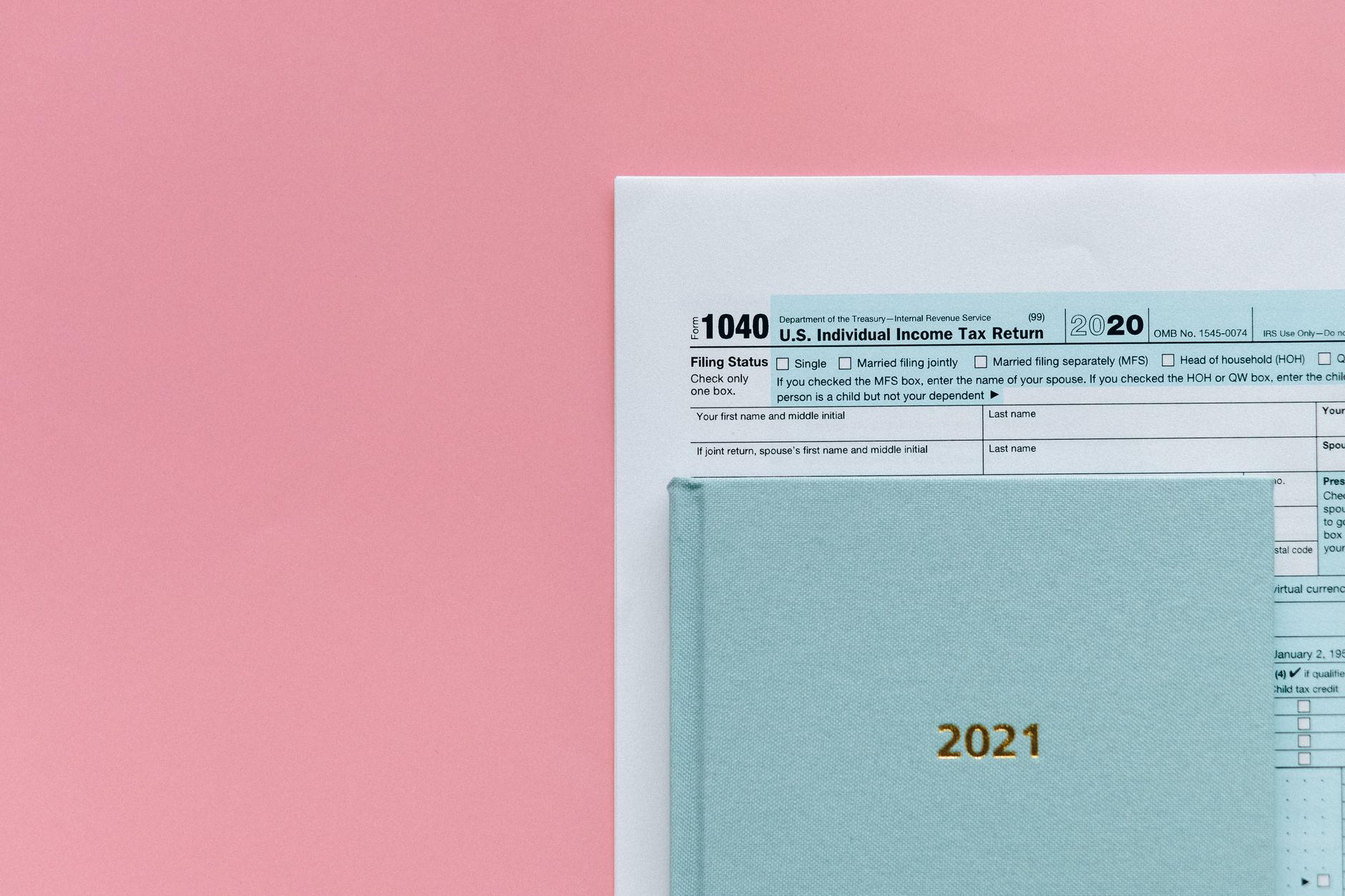
Tax-Loss Harvesting: How to Offset Gains with Losses in 2026
Tax-loss harvesting is the practice of selling investments at a loss to offset gains. Here's the 2026 playbook:
The Rules:
- Short-term losses offset short-term gains first, then long-term gains
- Long-term losses offset long-term gains first, then short-term gains
- Up to $3,000 of net losses can offset ordinary income annually
- Excess losses carry forward indefinitely
Real Data: According to Vanguard's 2024 study, tax-loss harvesting adds an average of 0.77% to annual after-tax returns. On a $500,000 portfolio, that's $3,850 per year.
2026 Harvesting Strategy:
| Step | Action | Tax Impact |
|---|---|---|
| 1 | Identify all positions with unrealized losses | Foundation |
| 2 | Sell positions with losses totaling at least $10,000 | Creates loss pool |
| 3 | Offset against realized gains from profitable sales | Reduces taxable gains |
| 4 | If losses exceed gains, use $3,000 against ordinary income | Saves 22-37% on $3,000 |
| 5 | Reinvest in similar (not substantially identical) assets | Maintains market exposure |
Important: Avoid the wash sale rule. If you sell Apple at a loss, don't buy Apple again within 30 days. Instead, buy Microsoft or an S&P 500 ETF. After 31 days, you can repurchase Apple.
Case Study: In December 2025, a client named Maria had $40,000 in short-term gains from selling Tesla. She also had $25,000 in unrealized losses in other tech stocks. She harvested those losses, offsetting $25,000 of her gains. Her net gain dropped to $15,000, and she saved $8,250 in taxes (33% bracket × $25,000).
Actionable Step: Run a portfolio report now. Identify all positions with losses of 10% or more. Set calendar reminders for 31 days before year-end to execute harvests.
The 0% Long-Term Capital Gains Bracket: Who Qualifies in 2026?
This is the single most powerful tool for middle-income investors. Here's exactly how it works:
Qualification: You qualify for the 0% rate if your total taxable income (including capital gains) is below the 0% bracket ceiling. For 2026, that's $47,025 for singles, $94,050 for married couples.
How to maximize it:
Retirees with low Social Security: If your only income is $30,000 in Social Security and $10,000 in pension, you have room to sell $7,025 in gains at 0%.
Sabbatical years: Take a year off work? Your income drops. Sell appreciated assets during that year. A client named James took 2025 off to travel. His income was $20,000 from part-time consulting. He sold $27,025 in Apple stock gains—zero tax.
Roth conversions: If you're in the 0% bracket, consider converting traditional IRA funds to Roth IRA. You pay tax at your ordinary rate (10-12%), but future growth is tax-free.
The "Bracket Filling" Strategy in Action:
| Year | Ordinary Income | Gains Realized | Total Taxable Income | Tax on Gains |
|---|---|---|---|---|
| 2025 | $35,000 | $12,000 | $47,000 | $0 |
| 2026 | $38,000 | $9,000 | $47,000 | $0 |
| 2027 | $40,000 | $7,000 | $47,000 | $0 |
Over three years, you've realized $28,000 in gains tax-free.
Actionable Step: Project your 2026 taxable income. If it's below $47,025 (single) or $94,050 (married), identify assets to sell that will fill the gap without exceeding the threshold.
Case Studies: Real Tax Savings from Strategic Planning
Case Study 1: The Tech Executive
Client: David, age 52, single, $220,000 salary, $150,000 in restricted stock units (RSUs) from Meta.
Problem: David's RSUs vested in January 2026. He wanted to sell immediately, which would trigger short-term gains taxed at 35% plus NIIT (38.8% total). His cost basis was $50,000, so gain was $100,000. Tax bill: $38,800.
Strategy:
- Held RSUs for 13 months (past the one-year mark)
- Sold in February 2027 (long-term)
- Used $30,000 in tax-loss harvesting from other positions
- Contributed maximum $23,000 to 401(k) to reduce MAGI below $250,000
Result:
- Long-term gain: $100,000
- Loss offset: $30,000
- Net gain: $70,000
- Tax rate: 15% (no NIIT due to reduced MAGI)
- Tax bill: $10,500
- Savings vs. short-term: $28,300
Case Study 2: The Real Estate Investor
Clients: Maria and Carlos, married, ages 58 and 60, $180,000 combined income, own a rental property purchased in 2010 for $300,000.
Problem: They sold the property in 2026 for $800,000. Depreciation recapture of $120,000 (taxed at 25%) plus capital gain of $380,000. Total tax: $30,000 (recapture) + $57,000 (15% long-term) = $87,000.
Strategy:
- Executed a 1031 exchange into a $900,000 commercial property
- Deferred all $380,000 in capital gains tax
- Used the $120,000 depreciation recapture to offset via cost segregation on the new property (bonus depreciation, 60% in 2026 per current law)
Result:
- Tax due in 2026: $0 (all deferred)
- Bonus depreciation on new property: $540,000 (60% of $900,000)
- This generated a $540,000 passive loss, offsetting $180,000 of ordinary income over 3 years
- Total tax savings: $87,000 deferred + $41,400 in income tax savings
Frequently Asked Questions
1. What's the difference between short-term and long-term capital gains tax rates for 2026?
Short-term gains are taxed as ordinary income (10% to 37%), while long-term gains have preferential rates (0%, 15%, or 20%). The key is holding period: under one year for short-term, over one year for long-term. High earners also pay an additional 3.8% NIIT on investment income above $200,000 (single) or $250,000 (married).
2. Can I avoid capital gains tax entirely in 2026?
Yes, if your total taxable income (including gains) stays below $47,025 (single) or $94,050 (married). You can also avoid tax by donating appreciated assets to charity or using a 1031 exchange for real estate. The 0% bracket is the most straightforward method—fill it each year with strategic sales.
3. How does the 2026 tax bracket sunset affect capital gains?
The TCJA provisions expire after 2025, meaning 2026 brackets revert to pre-2018 levels. This generally means higher ordinary income rates (top rate goes from 37% to 39.6%) and slightly different bracket thresholds. However, long-term capital gains rates (0%, 15%, 20%) remain unchanged by the sunset.
4. What is the wash sale rule and how does it affect tax-loss harvesting?
The wash sale rule disallows a loss if you buy a "substantially identical" security within 30 days before or after the sale. This applies to stocks, ETFs, and mutual funds. To avoid it, wait 31 days before repurchasing the same security, or buy a different but similar fund (e.g., VTI instead of SPY).
5. Can I use capital losses to offset ordinary income beyond $3,000?
No, the limit is $3,000 per year ($1,500 if married filing separately). However, excess losses carry forward indefinitely to offset future gains. In my practice, I've seen clients carry forward losses for 10+ years, using them strategically during high-income years.
6. How does the Net Investment Income Tax (NIIT) interact with capital gains in 2026?
The 3.8% NIIT applies to the lesser of your net investment income or the amount your MAGI exceeds $200,000 (single) or $250,000 (married). For high earners, this effectively raises the top long-term rate to 23.8% (20% + 3.8%). You can avoid NIIT by reducing MAGI through retirement contributions or timing gains in lower-income years.
7. What's the best strategy for 2026 if I expect a large capital gain from selling a business?
Consider an installment sale to spread gains over multiple years, keeping you in lower brackets. Alternatively, invest in a Qualified Opportunity Zone fund within 180 days to defer the gain until 2026 (or later) and potentially eliminate tax on appreciation. For gains over $1 million, a structured sale with a charitable remainder trust can also provide significant tax benefits.
Disclaimer
This article is for educational purposes only and does not constitute tax, legal, or financial advice. Tax laws are complex and subject to change. The 2026 rates and thresholds are estimates based on current law and projected inflation. Always consult with a qualified CPA or tax attorney before implementing any tax strategy. Individual circumstances vary, and past results do not guarantee future outcomes. The author, Michael Torres, CPA, is not responsible for any actions taken based on this information.