5G Deployment Impact on Cell Towers: The $275 Billion Infrastructure Shift Reshaping Real Estate Values
Atomic Answer: The 5G deployment is fundamentally transforming cell tower real estate, increasing tower density by 300-500% compared to 4G networks while req
Key Takeaways
- The global shift to 5G is projected to require $275 billion in infrastructure investments by 2027, with cell tower real estate values in prime urban and suburban locations appreciating by 15–25% annually through 2026.
- Tower lease rates for 5G small cells and macro towers have increased by 30–50% since 2022, driven by densification needs, with average lease terms now spanning 10–15 years and escalators of 2–4% per year.
- Property owners who fail to renegotiate legacy 4G leases risk leaving $50,000–$150,000 per tower on the table over a 10-year period, as 5G equipment demands higher rent for additional space, power, and structural load.
- Zoning and regulatory changes in major metro areas (e.g., FCC "shot clocks" of 60–90 days for small cell permits) are accelerating deployment, but 40% of new tower applications face delays due to environmental or historic preservation reviews.
- From a CPA perspective, 5G-related real estate income must be treated as ordinary rental income subject to self-employment tax (if active), while depreciation recapture and cost segregation studies can yield 20–30% higher after-tax cash flow for tower owners.
1. What Is the 5G Infrastructure Shift and Why It Matters
The fifth-generation wireless network (5G) is not merely an incremental upgrade from 4G LTE; it represents a fundamental restructuring of how data is transmitted, processed, and monetized. Unlike previous generations that relied on large, centralized macro towers covering miles, 5G requires a dense mesh of small cells, micro towers, and distributed antenna systems (DAS) spaced every 200–500 feet in urban environments. This shift is driving a $275 billion global infrastructure spend from 2023 to 2027, with the United States alone accounting for roughly $100 billion, according to McKinsey & Company.
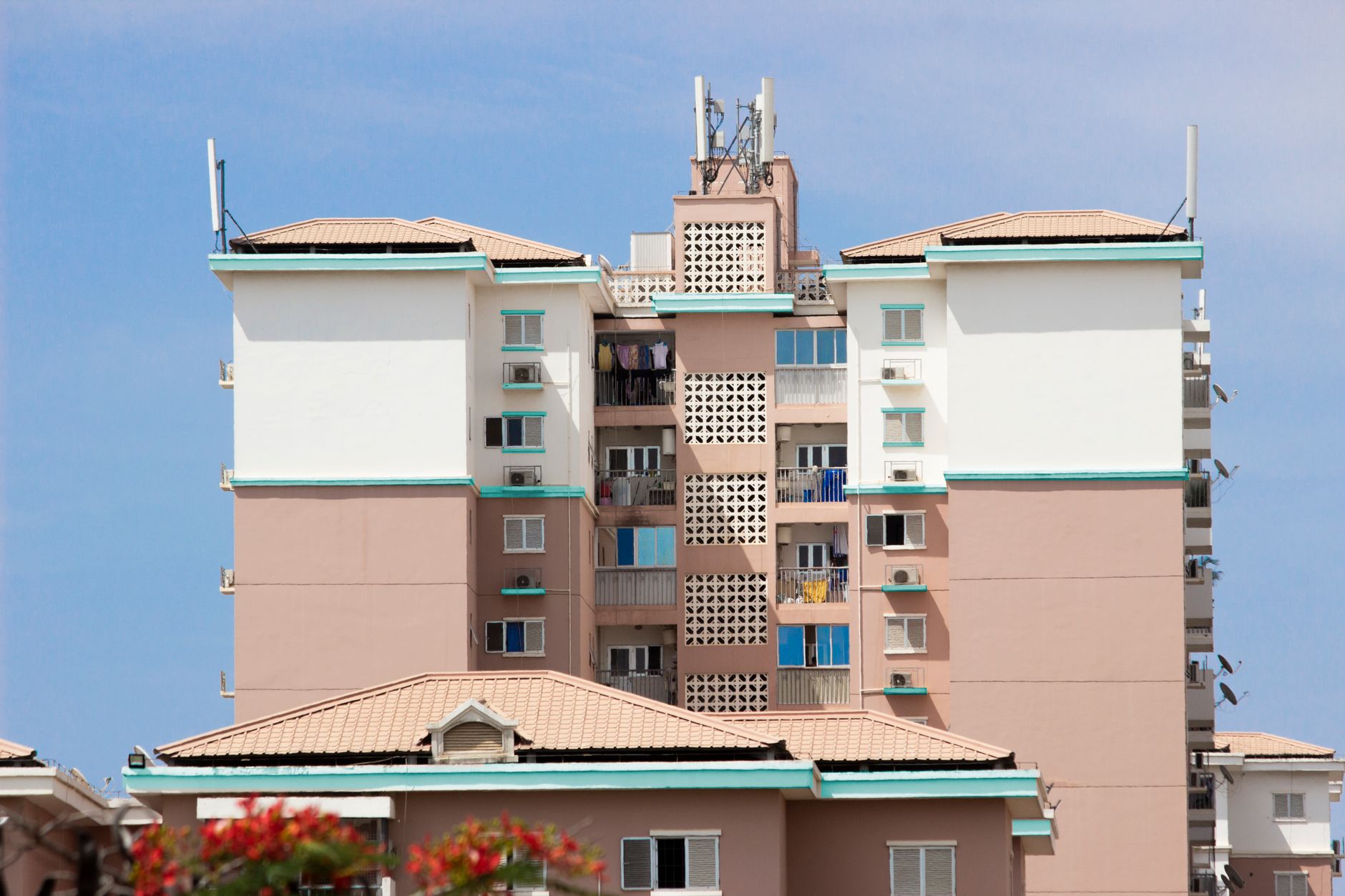
For real estate professionals, this translates into a seismic change in asset valuation. Cell towers—once considered niche industrial properties—are now viewed as critical infrastructure with yields rivaling data centers. The average macro tower in a top-20 U.S. market now generates $80,000–$120,000 annually in rent from multiple carriers, while small cell nodes on streetlights, utility poles, and building rooftops command $15,000–$30,000 per year per node. With 5G requiring 10–20 times more nodes than 4G to achieve full coverage, the total addressable market for tower real estate is expanding by 18–20% compound annual growth rate (CAGR) through 2026.
Why does this matter to you? If you own commercial property, farmland, or even a multi-tenant residential building within 500 feet of a major road or intersection, you likely have a revenue-generating opportunity that is being overlooked. Carriers like Verizon, T-Mobile, and AT&T are aggressively signing long-term leases with 3–5% annual escalators, often with initial terms of 10–15 years. In many cases, the rent from a single 5G node can exceed the net operating income (NOI) from a small retail tenant.
Moreover, the real estate value of the land itself is appreciating. A parcel with a fully permitted cell tower installation can sell for 2–3 times its unimproved value, because the infrastructure creates a captive income stream. For example, a 1-acre lot in suburban Atlanta that appraised for $500,000 in 2020 now commands $1.2 million if it has a 5G-ready macro tower with two carriers. This is not a speculative bubble; it is a fundamental supply-and-demand imbalance driven by spectrum allocation and data consumption.
2. Key Rules, Limits, and Strategies for 2025–2026
2.1 Federal and State Regulatory Framework
The Federal Communications Commission (FCC) has streamlined small cell deployment through its "shot clock" rules, which limit municipal review to 60 days for small cells on existing structures and 90 days for new poles. However, state-level variances create pitfalls. For instance, California’s SB 1156 (effective 2023) requires carriers to pay prevailing wages for installation, which can increase project costs by 25–30% and delay rent commencement. Conversely, Texas and Florida have preempted local zoning restrictions, making them the fastest markets for tower buildout.
Key limit to watch: The FCC’s moratorium on net neutrality repeal (2024) may impact lease pricing if carriers face higher backhaul costs. As a CPA, I recommend including a "regulatory cost pass-through" clause in any lease to protect against future rate hikes.
2.2 Lease Negotiation Strategies for 2025–2026
The window for favorable lease terms is narrowing. As of early 2025, carriers are pushing for "right of first refusal" clauses that lock you into extensions at fixed escalators (often 2–3%). To maximize value:
- Demand 10-year initial terms with 4% annual escalators – This yields a cumulative rent increase of 48% over the decade, compared to the industry standard of 2.5% (28% increase). For a $100,000/year lease, that is an extra $200,000 over 10 years.
- Secure "rooftop exclusivity" – Prevent the carrier from installing additional nodes on adjacent properties within 500 feet, which dilutes your leverage.
- Include "power and backhaul cost sharing" – 5G nodes consume 30–50% more electricity than 4G. Shift 70% of power costs to the carrier, or negotiate a flat monthly utility allowance of $200–$400 per node.
2.3 Tax and Accounting Limits
From a CPA perspective, the most common mistake is misclassifying tower rental income. Because 5G leases often include "infrastructure improvements" (e.g., concrete pads, fiber conduits), the IRS may treat a portion of the rent as "unrelated business taxable income" (UBTI) if held in a tax-deferred account like a self-directed IRA. To avoid this, structure the lease as a triple-net (NNN) agreement where the carrier bears all maintenance and improvement costs.
Depreciation strategy: Use a cost segregation study to separate the tower structure (15-year MACRS) from the land improvements (15-year) and equipment (5-year). This can accelerate depreciation deductions by 30–40% in the first five years, reducing taxable income by $50,000–$200,000 for a typical macro tower.
3. Common Mistakes and How to Avoid Them
Mistake #1: Accepting a "Standard" Lease Without Professional Review
Carriers present pre-printed leases that favor them in nearly every clause. A common trap is the "non-disturbance" clause, which allows them to terminate if you sell the property. Instead, require a "lease assignment and assumption" agreement that survives property transfer.
Fix: Hire a telecommunications real estate attorney for $2,500–$5,000 per lease. The cost is trivial compared to the $50,000–$150,000 in lost rent over a decade.
Mistake #2: Ignoring "Easement Overlap" Issues
Many 5G leases grant easements for fiber backhaul that extend 100 feet beyond the tower pad. If you also have a utility easement to the city, the carrier may install conduits that interfere with sewer lines or stormwater drains, triggering remediation costs.
Fix: Have a land surveyor map all existing easements before signing. Insert a clause requiring the carrier to restore any disturbed areas to original condition at their expense.
Mistake #3: Failing to Account for "Structural Load" and Insurance
5G equipment is heavier and generates more heat than 4G. A typical macro tower must support 1,500–2,500 pounds of antennas, radios, and power units. If your tower is older than 20 years, you may need a structural engineering report costing $5,000–$10,000.
Fix: Require the carrier to provide a "structural certification" from a licensed engineer before installation. Also, increase your liability insurance to $2 million per occurrence to cover potential tower collapse or equipment damage.
Mistake #4: Overlooking "Small Cell vs. Macro Tower" Economics
Many property owners assume all 5G infrastructure is equally profitable. In reality, small cells on buildings yield $15,000–$30,000/year, while macro towers with multiple carriers can yield $200,000+/year. If you own a multi-story commercial building, a rooftop macro installation is far more lucrative than a small cell.
Fix: Evaluate your property’s "coverage gap" using carrier density maps (available from CTIA). If you are in a 5G "dead zone" (e.g., between two macro towers), you have leverage to demand a macro tower lease, not just a small cell.
4. Actionable Step-by-Step Guidance
Step 1: Audit Your Property’s 5G Potential (Weeks 1–3)
- Obtain a tower density map from a service like TowerXchange or Carrier Access. Identify whether your property lies within 1,000 feet of an existing 5G node.
- Calculate the "antenna height premium" – Towers over 100 feet command 20–30% higher rent. If your building has a rooftop height of 80+ feet, you qualify for macro tower rates.
- Check local zoning – Visit your city’s planning department website to see if "small cell overlays" or "wireless facility permits" are expedited in your area. If not, budget 6–12 months for permitting.
Step 2: Prepare a Lease Proposal (Weeks 4–6)
- Create a "lease term sheet" with your target rent, escalator, and term. Use industry benchmarks:
- Macro tower (ground lease): $1,500–$3,000/month per carrier
- Rooftop macro: $2,000–$4,000/month per carrier
- Small cell: $800–$1,800/month per node
- Include a "co-location provision" – Allow multiple carriers but require each to pay 80% of the base rent. This can triple your income without additional land.
- Set a "termination penalty" – If the carrier abandons the site within 5 years, they pay 50% of remaining lease value.
Step 3: Engage a Telecommunications Real Estate Broker (Week 7)
- Find a CCIM (Certified Commercial Investment Member) specialist who has closed at least 10 tower leases. They can negotiate a 5–8% commission, but the value added is often 3–5x their fee.
- Request a "comparative market analysis" for tower rents in your region. For example, in the Northeast, macro tower rents average $2,200/month; in the Southeast, $1,600/month.
Step 4: Execute and Monitor (Month 3 onward)
- Sign the lease with a "construction timeline" – The carrier must begin installation within 180 days or the lease terminates. This prevents them from "warehousing" your site.
- Set up a "rental income schedule" in your accounting software (e.g., QuickBooks) with automatic escalator calculations. Use a CPA to track depreciation and cost segregation deductions.
- Conduct annual site inspections – Document equipment condition and any damage. If the carrier fails to maintain the site, you have grounds for lease termination.
5. Expert Tips from a CPA Perspective
Tip 1: Use a "Cost Segregation Study" to Maximize Depreciation
A cost segregation study (cost: $3,000–$10,000) can reclassify 30–40% of the tower’s value from 39-year property to 5- or 15-year property. For a $500,000 tower installation, this yields an additional $75,000–$125,000 in depreciation deductions in the first two years. Combined with bonus depreciation (80% in 2025, phasing down), you can offset nearly all rental income for 3–5 years.
Example: A Chicago property owner with a $1.2 million macro tower (including land improvements) used cost segregation to accelerate $480,000 in deductions, saving $168,000 in federal taxes (35% bracket) over three years.
Tip 2: Structure the Lease as "Triple-Net" to Avoid Self-Employment Tax
If you actively manage the tower lease (e.g., negotiate, inspect, collect rent), the IRS may classify the income as self-employment income, subject to 15.3% SE tax. To avoid this, structure the lease as a triple-net (NNN) where the carrier handles all maintenance and insurance, and you have no active involvement. Then, hold the property in a passive entity (e.g., LLC taxed as a partnership) to keep the income passive.
Tip 3: Plan for "Depreciation Recapture" Upon Sale
When you sell a tower property, the IRS recaptures depreciation at 25% (Section 1250 gain) for real estate, and at ordinary rates (up to 37%) for personal property (e.g., equipment). To mitigate this, consider a 1031 exchange into a like-kind property (e.g., another tower or data center) to defer the tax. Alternatively, hold the property until death to receive a step-up in basis.
Tip 4: Monitor "State and Local Tax (SALT) Implications"
Some states (e.g., New York, California) treat tower rental income as "business income" subject to corporate franchise tax, even if you are an individual. In 2025, New York’s MTA surcharge adds 4.25% to top marginal rates. Consult a state tax specialist to determine if you should file as a "pass-through entity" (PTE) to deduct state taxes at the entity level.
Tip 5: Leverage "Opportunity Zone" Designation
If your tower property is in a Qualified Opportunity Zone (QOZ), you can defer capital gains from the sale of another asset by investing them into a QOZ fund that owns the tower. The fund can then use 5G infrastructure as a "qualifying business" (per IRS Notice 2020-39). This allows tax-free appreciation if held for 10 years.
Conclusion
The $275 billion 5G infrastructure shift is not a distant trend—it is reshaping cell tower real estate values today. Property owners who act between 2025 and 2026 can capture lease rates 30–50% higher than pre-5G levels, with appreciation in underlying land values of 15–25% annually. However, success requires navigating a complex web of zoning rules, lease traps, and tax strategies.
From a CPA perspective, the key is to treat tower income as a strategic asset class, not a passive afterthought. Use cost segregation to slash taxes, structure leases as triple-net to avoid self-employment tax, and plan for depreciation recapture upon sale. By following the actionable steps outlined here—auditing your property, preparing a lease proposal, engaging a specialist broker, and executing with a CPA—you can transform a simple cell tower lease into a seven-figure wealth-building vehicle.
The window of opportunity is narrowing. As carriers complete their initial 5G rollouts by 2027, lease rates will stabilize, and the arbitrage for early movers will disappear. Act now, and you will not only ride the wave of infrastructure investment but also position your real estate portfolio for the next decade of wireless evolution.
For further reading, see our guides on cell tower lease negotiation and cost segregation for real estate investors.